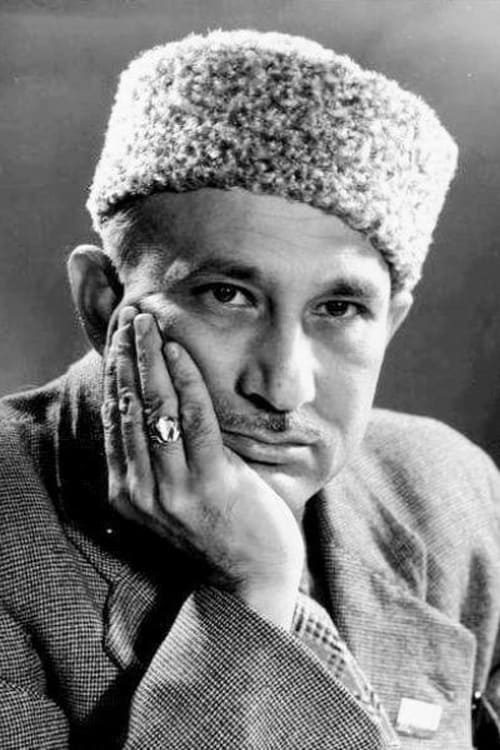
Khwaja Ahmad Abbas
Khwaja Ahmad Abbas, widely recognized by his initials K. A. Abbas, was a multifaceted Indian creative force whose talents spanned cinema, literature, and journalism. Fluent in Urdu, Hindi, and English, he left an indelible mark on each medium he touched.
As a filmmaker, Abbas was a pioneering figure in Indian cinema, often blending social realism with mainstream appeal. He directed the acclaimed film *Saat Hindustani* (1969), a patriotic drama that notably marked the acting debut of Amitabh Bachchan. His directorial ventures, such as *Muni* (1954) and *Do Boond Pani* (1971), earned him National Film Awards, solidifying his reputation as a storyteller with a conscience. Beyond directing, he was a prolific screenwriter, co-writing iconic films like *Awaara* (1951) and *Shree 420* (1955) alongside the legendary Raj Kapoor, contributing to some of the most celebrated narratives in Hindi cinema.
In the literary realm, Abbas was equally accomplished. His novel *Inquilab* (1955) won the Soviet Land Nehru Award, and his short story collection *The Rice and Other Stories* showcased his deft narrative skill. As a journalist, he wrote with sharp insight, and his autobiography, *I Am Not an Island*, offered a candid look at his life and times. Through his diverse works, Abbas championed progressive ideals and remains a towering figure in Indian arts.